
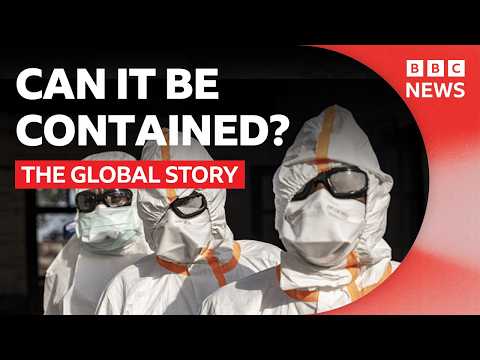
The public health risk from the current Ebola outbreak in the Democratic Republic of Congo has been increased from "high" to "very high" by the World Health Organization (WHO).
In an update on Friday 22 May, the WHO’s head Dr Tedros Adhanom Ghebreyesus also said the risk in the wider region in Africa was "high", but it remained "low" at a global level.
There are different strains of Ebola; the current strain identified in Democratic Republic of Congo is caused by the Bundibugyo virus.
The WHO says there are no approved drugs or vaccines for the strain of Ebola caused by the Bundibugyo virus.
Asma Khalid speaks to the BBC’s Health and Science correspondent, James Gallagher, about the outbreak. She asks: what is Ebola, what are the symptoms, how does it spread, where does it come from and whether there a cure, vaccine or treatment.
Subscribe to our channel here: https://bbc.in/bbcnews
For the latest news download the BBC News app or visit BBC.com/news
#BBCNews #Ebola #Drcongo
Chapters:
00:00 Introduction
01:45 What does a public health emergency mean?
02:47 What is Ebola?
04:03 What animals carry Ebola?
05:45 Where have Ebola outbreaks occurred?
08:43 Why is the current Ebola outbreak so significant?
11:03 How did the latest Ebola outbreak begin?
17:00 How do you stop the spread of Ebola?
20:56 What has been the US response to Ebola?
23:50 How does Ebola compare to Covid?